Tuesday, July 10, 2012

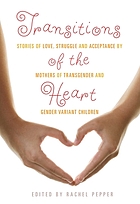
booknotes: transitions of the heart

Last week I picked up a copy of Rachel Pepper'sTransitions of the Heart: Stories of Love, Struggle and Acceptance by Mothers of Transgender and Gender Variant Children (Cleis Press, 2012). The anthology collects personal essays by mothers whose children identify somewhere within the trans/genderqueer spectrum. I was pleased to see the volume at our local library (Brookline Public), and after posting about it at Twitter a colleague of my father's back in West Michigan actually went and looked for it at the public library in my hometown -- and found it! (Yet another reason that Herrick District Library continues to be awesome.) It's heartening to see how trans issues resources are making their way into mainstream spaces.

Transitions is a moving collection of very personal stories, and I hesitate to reduce the nuances of each to general themes. One of the strengths of the anthology is, in fact, the diversity of stories. Mothers from across the United States (and a few from Britain) describe the fears and joys of parenting a trans child, whether that child is transitioning on the eve of retirement or just entering kindergarten. Families are Euro-American, African-American, Latin-American and Asian-American. Families are queer, single parent- or blended-family homes, as well as your husband-wife-kids prototype. There are urban professionals and rural hippies, Bible-thumping Baptists and Jewish-Italians. Generational themes emerge that are in line with what the authors of The Lives of Transgender People observe: that the experience of trans folks who came of age in the 70s or 80s, and even the 90s, is markedly different and often more agonizingly isolated than for youth of later generations. Parents or earlier generations also look back wishing they had had more support through their child's transition, more resources to help them navigate. Understanding therapists and parental support networks (both on and offline) emerge as much-needed lifelines throughout these contributions.

I was struck by the number of mothers who articulated a sense of grief and loss for the child they thought they knew (the daughter they "lost" in order to gain a son, or the son who "died" in order to give birth to a daughter). Grief is often a component of change, and all of us (trans or not) "lose" our earlier selves in some measure as we grow older. My own mother has articulated the sense of loss for certain stages of our development as we aged -- though that loss was always accompanied by the joy of new discovery and expressions of selfhood. Tracie Stratton articulates well the bewilderment of grief that accompanies many mothers' reactions to a child's assertion of transness: "I did have moments of really missing my daughter Isabelle, who in reality was never there ... How could I miss a little girl who was never a little girl?" (115).

I keep writing "parents" as I type this review, and then having to go back and replace the word with the more precise "mothers" -- because fathers are a strikingly absent voice in this anthology. While the anthology is framed as one for mothers' stories, I couldn't help but wonder about that choice. It seems to reinforce the assumption that mothers are the primary managers of their children's well-being and the ones with the primary emotional investment in their growth. The fathers who emerge in these narratives are most often anxious and angry (though a few very supportive spouses can be glimpsed between the lines). It is often the fathers who resist cross-dressing or cross-gender play, particularly in their sons, and a few mothers even wrote about fear of losing custody of their child due to an ex who was unsympathetic to gender variance and accused the mother of child maltreatment.

One final theme I noticed in Transitions was the persistence with which mothers located knowledge of transness in gender atypical behavior and play. For example, the desire of a child assigned male at birth to dress in pink sparkly clothes, or a child assigned female at birth who was inconsolable at her first period. Some mothers tried hard to separate gendered behavior from innate sense of self, reassuring sons that they could like the color pink or play with dolls without having to be a girl, and reassuring daughters that they didn't have to wear dresses or play princess -- that girls could like sports and Spider Man too. But children, particularly preschool-aged kids, were insistent that this behavior actually signified a deeper sense of themselves as a different sex. The feminist in me feels for mothers who want their children not to feel bound to certain behaviors due to their gender identity, and I imagine when transness is layered on top of the highly gendered world in which we raise our children the result is a maze of choices exhausting (and often threatening) to navigate.

Finally, what Transitions makes clear is how crucial it is for all of us to work toward a world in which trans folks of all ages are welcomed as part of the human community, free of gender policing and the threat of emotional and physical violence. As Anna Randolph writes, in the closing selection in this book:
Even if it is true, it is not helpful to me when you say to me 'your child is transgender' without knowing anything about us. It has been implied that I am harming, even abusing, my child by not letting her transition at age nine or ten. You do not know or bother to ask about our circumstances, or attempt to understand why I make the choices I do. You do not see the many ways I convey my love and acceptance to my child while keeping her safe. You are not responsible for every aspect of this child's well-being, I am ...

... Before I could let my child transition, I needed to know she was in a relatively safe school and neighborhood. I had to assemble a strong team of providers, including a supportive pediatrician, psychiatrist, therapist, and endocrinologist. It was essential that we had a supportive community around us, including a welcoming church, family, and friends. More than anything, I needed my child to be sure she was ready. I believe she has always felt this way, but was unable to claim her identity until she felt support from her other parent, and felt safe enough and strong enough to handle the hard stuff (194).
So there's the laundry-list of work to do, folks! Let's get cracking, so that fewer and fewer parents have to fight so hard and long to advocate for their child's ability to be themselves in the world. Transitions was a worthwhile read, and I really hope they follow it up with a volume in which fathers of trans kids share their own stories of "love, struggle and acceptance."

Tuesday, June 26, 2012

booknotes: thirteen books to read instead of "religious right"

A few weeks ago, I got an advance review copy of A. F. Alexander's Religious Right: The Greatest Threat to Democracy (Blazing Sword Publishing, 2012) through LibraryThing's Early Reviewer giveaway program. Alexander, a refugee from fundamentalist, evangelical Christianity, is on a mission to expose the agenda and tactics of the politicized Christian right and convince her readers that the movement is "ominous, and requires immediate attention."

I agree with Alexander that the religious right is not a force to be underestimated, and also agree with her that their vision of America as a nation does not jibe with mine, most of the time (frankly, I enjoy going about my homosexual ways without fear of arrest, like my bodily autonomy, and wouldn't give a shit if our president were Muslim and foreign-born). However, if you're interested in reading about the rise of conservative Christian political clout since the 1960s, there are other books I would recommend you read instead of this one -- if for no other reason than that they are well-written and copy-edited. Alexander is clearly passionate about her subject, but I can't help feeling that her energy might have been better spent on a memoir (a la Deborah Feldman's Unorthodox: The Scandalous Rejection of My Hasidic Roots), a work of fiction (e.g. Miriam Toews' A Complicated Kindness) or perhaps curating a website or blog that might serve as a gathering space for ex-fundies (see, for example, No Longer Quivering) or contributing pieces to a news blog that covers religion and politics (see Religion Dispatches). While her research might come from an authentic and personal space, it's unclear what her polemic does that other texts have not done before, and better.

I definitely wish Alexander well in her life and in her growth away from the fundamentalist Christianity she found personally (and politically) toxic. Prospective readers interested in religious fundamentalism of the modern era, however, would do better to check out one of the following baker's dozen worth of titles that tell the story of modern American evangelical Christianity in much more readable prose, along with substantive evidence and analysis:

Thirteen Books to Read Instead of Religious Right:

Armstrong, Karen. The Battle for God (Alfred A. Knopf, 2000). Ex-nun, historian or religion, and public intellectual Karen Armstrong offers a sweeping historical and theological analysis of the rise of fundamentalism in the modern era in the three Abrahamic faiths: Judaism, Islam, and Christianity. Part history, part psychology, part political theory, this is a tour de force.


Balmer, Randall. Mine Eyes Have Seen the Glory: A Journey into the Evangelical Subculture in America (4th ed. Oxford U.P., 2006). Originally published in 1993 and turned into a PBS series by the same name, this memoir-cum-ethnographic study explores various sites of evangelical Christianity in the U.S. circa the mid-1980s. Full disclosure: Randy is an Oregon Extension alum and participated in my oral history project.

Erzen, Tanya. Straight to Jesus: Sexual and Christian Conversions in the Ex-Gay Movement (University of California Press, 2006). Sociologist Erzen delves deep into the culture of the ex-gay movement, conducting ethnographic research on-site at New Hope, the oldest ex-gay ministry in the United States. Her empathetic analysis humanizes her subjects, persistently allowing them to make meaning of their own lives, even as she raises concerns about the ex-gay movement's notions of gender and sexuality.

Fallon, D'Arcy. So Late, So Soon (Hawthorne Books, 2004). Fallon's memoir is a beautiful meditation on her reasons for joining a Christian commune in Northern California as a footloose adolescent, her love affair with fundamentalist Christianity, and her later escape from the community's demanding clutches. Fallon doesn't gloss over the controlling, abusive aspects of her experience she helps us into an understanding of what it was her younger self found compelling about Lighthouse Ranch.

Frank, Doug. A Gentler God (Albatross Books, 2011). Part memoir, part theological exegesis, part history of twentieth-century evangelical culture, historian of ideas Doug Frank explores the abusive nature of fundamentalist, evangelical Christian theology and suggests a more loving way forward. Full disclosure: Doug is a former professor of mine, and participated in my Oregon Extension oral history project.

Frykholm, Amy. Rapture Culture: Left Behind in Evangelical America (Oxford U. P., 2007). Herself a child of evangelical culture, Frykholm uses social science research methods to explore the popular culture of the Left Behind novels, interviewing readers about how this fictional depiction of the end times informs their faith and everyday lives.

Frykholm, Amy. See Me Naked: Stories of Sexual Exile in American Christianity (Beacon Press, 2011). Frykholm's second work is a series of essay-length case studies built from length interviews she conducted with Christians who struggle (or have struggled) with embodiment and sexuality in relation to their religious faith.

Goldberg, Michelle. Kingdom Coming: The Rise of Christian Nationalism (W. W. Norton, 2006). Journalist Goldberg explores the thinkers and activists behind Christian nationalism, or Dominionism -- the segment of the religious right that believes that America was founded as, and should be returned to,

Jordan, Mark D. Recruiting Young Love: How Christians Talk About Homosexuality (University of Chicago Press, 2011). Richard Reinhold Niebuhr Professor of Divinity at Harvard Divinity School, with a joint appointment Women, Gender, and Sexuality, Jordan offers a series of case studies in Christian rhetoric about homosexuality across the twentieth century.

Lamott, Anne. Traveling Mercies: Some Thoughts on Faith (Pantheon Books, 1999). If you're interested in why a dreadlock-sporting, pro-choice leftist would be drawn to evangelical Christianity, this is the book for you.

Ostling, Richard and Joan. Mormon America: The Power and the Promise (Harper, 1999). A thoroughly-researched, historically- and theologically- informed account of the Latter-Day Saints and their place in American culture. Following the involvement of the LDS church in the anti-marriage equality activism, and Romney's bid for the U.S. Presidency, Mormons are in the spotlight more than ever, and it's useful to have some historical perspective on this peculiarly American institution.

Rosin, Hanna. God's Harvard: A Christian College on a Mission to Save America (Harcourt, 2007). Recently-founded Patrick Henry College sent more interns to the Bush White House than any other institution of higher education. Journalist Rosin sets out to discover why, delivering a troubling, though not entirely unsympathetic, portrait of Patrick Henry's mission and student body. See also: Right: Portraits from the Evangelical Ivy League.

Radosh, Daniel. Rapture Ready: Adventures in the Parallel Universe of Christian Pop Culture (Scribner, 2008). This rolicking tour of Christian rock, Silver Ring Thing purity events, Christian publishing, and more also offers on-the-ground insight into how political and theological worldviews are marketed via kitsch and community in American consumer culture.

Tuesday, June 19, 2012

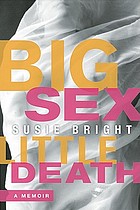
booknotes: big sex, little death

About a year after its debut, I finally got around to obtaining a copy of Susie Bright's Big Sex, Little Death: A Memoir (Seal Press, 2011) from our local library network.  Bright, for those of you unfamiliar with the name, is a sexuality educator, poet, and activist. She is perhaps most famous (or infamous) in feminist circles as one of the founding editors of On Our Backs, a magazine for lesbian erotica that first appeared in 1984 and became a major player in the lesbian/feminist "sex wars" of the 80s. Bright, along with Carol Queen, Gayle Rubin, Pat Califia, and a handful of other queer folks of varying stripes, were instrumental in articulating a vision of human sexuality and erotic imagination that ran counter to the anti-pornography stance of feminist activists such as Gail Dines, Katherine Mackinnon, and Andrea Dworkin.* As proponents of what eventually became identified as "sex-positive feminism," Bright and company were banned from college campuses, received death threats, and -- in a classic example of Godwin's Law -- were accused of being sexist Nazis, promoting female genocide. Toward the end of Big Sex, Bright writes about visiting the University of Minnesota to speak about "lesbian eroticism in cinema," only to find herself rushed by a young woman in the restroom "carrying something sharp in her hand." The would-be attacker stuttered to a halt when she took in Bright's advanced state of pregnancy, which somehow hadn't registered during the lecture. "In my protestors' minds, I was killing women with my wicked ways, not creating new life" (221).

Unlike Carol Queen's Real Live Nude Girl or Gayle Rubin's recently-released anthologyBig Sex, Little Death actually has relatively little to say about sex.  Or, at least, its primary purpose is not to articulate a politics of sex, or even focus on Bright's personal experience with sexuality. When sex enters the narrative it does so episodically, with Bright talking about her adolescent sexual fumblings (and, many would argue, the sexual abuse -- or at least exploitation -- she suffered at the hands of older male leftist organizers), or her on-the-ground frustration with the sexual policing within lesbian feminist circles of the Seventies and Eighties.

These are glances only, rather than a narrative through-line, and at times I found myself frustrated by the lack of reflection from now-Susie on then-Susie's sexual experiences and what meaning she has made out of them. She describes for example, how at age fifteen she and her friend-cum-lover Danielle (also fifteen) "seduced" older men, sometimes for fun, sometimes for cash. She describes the sexual availability she was expected to sustain within the socialist groups she was active in as a teenager and into her early twenties, and in contrast to Jeanne Cordova (in When We Were Outlaws) doesn't spend much ink considering how those sexual dynamics contributed to the way she was used and abused as a youthful activist. While I appreciate the philosophy of being gentle with one's younger self, at times it feels like Susie-Bright-the-adult has abdicated the role of narrator to such an extent that injuries done to her are overlooked in the memoir as they were unacknowledged at the time.

The most difficult to read -- and also most deftly-handled -- passages of Big Sex are those dealing with Bright's relationship with her parents, and to a lesser extent the way in which those deeply troubled interactions shaped her own choices as a parent. Her mother struggled with an undiagnosed mental illness that, together with her own neglected, poverty-ridden childhood, seems to have left her with very little in the way of emotional and material resources. She repeatedly tried to commit suicide and once attempted murder-suicide with adolescent Susie in the car, only to crash the car before they reach the river, and abandon injured Susie to make her own way home. Explanations for the behavior (e.g. untreated mental illness and lack of social support) don't lessen the reality that Susie grew up with incredibly shitty, near-fatal, parenting from her mother and more benign neglect from her father. And despite my own lack of personal triggers regarding family abuse, there were a couple of times when I almost had to put the book down out of anger and sadness that anyone has to live through that sort of experience -- particularly as a child dependent on their abuser.

When, at thirty-two, Bright faces an unplanned pregnancy, she's surprised by the depth of her desire to carry to term:
The real reason I couldn't imagine having a baby was that I was afraid of my temper, afraid of doing those things for which you can't ever fully apologize. I knew that my mom had been "sorry" that she had hit me (after all, it wasn't as badly as she'd been hit). She didn't remember threatening me (after all, we did survive). Maybe it was my fault sometimes; isn't that what kids think? Mommy, I'm sorry, I'm so sorry. It changed nothing for her. But then, her actions had very little to do with me (287-288).
The desire to give birth, coupled with the fear she would replicate her own mother's abusive behavior, leads Bright on a very intentional path toward parenting differently from the way her mother parented. While obviously we only have her perspective on her daughter's childhood, it sounds from Big Sex like Bright created a family realm that helped her manage her temper in a way that would not spread the damage to yet another generation. And that's always a beautiful, courageous thing to see happen.

Overall, I highly recommend this memoir for anyone interested in another eyewitness account of the turbulent era of imploding social change activism during 70s and 80s, when internal dissent combined with a resurgent conservatism and mainstream hostility to turn leftists against each other in unhelpful ways. Yet in the midst of this strife, creative things happened and people came of age to become a new generation of movers and shakers in ways that, hopefully -- as in Susie Bright's own familial life -- will not spread the damage of generations before. One of the things that gives me heart, as a thirtysomething feminist, is the way in which forty- and fiftysomething activists are refusing to eat their young, working hard to break the pattern of generational strife and ideological antagonism of their own coming-of-age.


*When Andrea Dworkin passed away in 2005, Susie Bright wrote a beautiful remembrance of her that both paid homage to the important theoretical and political work Dworkin had done, and acknowledged the lingering scars of that period.

Tuesday, June 12, 2012

booknotes: fair game

Welcome to June, and the season of leisure reading! Actually, I try to enjoy leisure reading all year 'round. But publishers often time their releases for "beach reading" season -- so here we are. Last week, I happily secured a copy of Patricia Briggs' fourth installment in her Alpha and Omega series, Fair Game (Ace, 2012).

I've written before about my reservations regarding this series and particular how Briggs handles the central character, Anna, and her history of victimization. Now that we're into the third novel (all building on a novella originally published in the anthology On the Prowl), Anna's history as an abuse survivor has mercifully fallen away into the background and with her marriage on fairly stable footing we're free to focus on a plot that isn't romantic relationship development -- at least not exclusively so. She and Charles are still working through the particular dynamics of their partnership as humans and as wolves, but it is clearly a partnership in which both people are stubborn as hell. So mostly I'm willing to roll. (As an aside, I'm waiting for the day when Briggs decides to write a back-story about Charles' father Bran, who I think is intriguing as hell and kinda adorable to boot).

Like Hunting Ground, Fair Game takes up the question of human-nonhuman political relations. A serial killer has surfaced in Boston and taken several werewolves as victims. The FBI requests preternatural assistance and Anna is deputized by Bran, her father-in-law and head werewolf of North America, to fly across the country, with Charles as her "bodyguard"/shadow, to lend a hand. When the daughter of a local fae leader is abducted and the disappearance fits the serial killer pattern, Charles and Anna end up in a more direct role tracking down the killer. Like a lot of Briggs' novels, Fair Game is one part urban fantasy and one part mystery; it's no surprise that at the end the killer is brought to justice and the good guys prevail -- though perhaps not as tidily as they might have hoped.

I'm growing to like this spin-off series, and am looking forward to the day when Mercy and Anna meet in person. I think they might work (and play) well together!

Tuesday, May 29, 2012

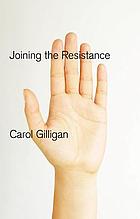
booknotes: joining the resistance

Psychologist Carol Gilligan is something of a controversial figure in feminist circles. Her work on young women's psychological health (In a Different Voice) is widely read and widely criticized for dramatizing adolescent girls' experience in unhelpful, alarmist ways; I once had a Women's Studies professor, herself a psychologist, react to the news I was reading Gilligan's The Birth of Pleasure (Knopf, 2002) with caution, pointing out gently that her theories often seemed to rely on assumptions about gender essentialism that sat uncomfortably with many.

As an instinctive anti-essentialist (at least when it comes to gender) I remember being a bit surprised that Gilligan's arguments would be taken that way -- since that wasn't the sort of psychological landscape I saw her outlining in Pleasure. Weaving together reflections on canonical female truth-tellers (drawing on her background in English literature) and her psychological research, Gilligan is primarily interested in how individuals -- of any gender -- speak or stay silent about what they know. Drawing on theories of developmental psychology, psychoanalysis, a feminist analysis of the kyriarchy, Gilligan argues that human beings are born into the world with a full range of psychological resources which are then curtailed by gender policing which in turn causes psychic trauma.

Drawing parallels between preschool age boys and middle school age girls, Gilligan suggests that at points when growing beings are initiated into new levels of patriarchal control, we see increased instances of acting-out and destructive behavior (toward the self and others). Because girls experience this trauma at a later developmental stage than boys, she argues, women as a population are more likely to be able to articulate what they have lost in the initiation process, and to have the resilience to push back successfully. Men, she theorizes, can often identify the trauma of being forced into male-stereotyped behavior, but because it happened so early in childhood have a very difficult time accessing memories of their humanity before certain ways of being were rendered off-limits due to gendered expectations.*

Which brings us to Gilligan's latest work, a slim volume titled Joining the Resistance (Polity Press, 2011). Half reflection on her body of work, half call to action, Resistance shares some of the highlights of Gilligan's research in an accessible way and makes a passionate appeal for re-connecting with the parts of our humanity that the oppositional gender-binary has robbed from us. "Our ability to love and to live with a sense of psychic wholeness hinges on our ability to resist wedding ourselves to the gender binaries of patriarchy," she argues, in language that should make any feminist worth her salt jump for joy (109). This recalls the research Phyllis Burke cites in Gender Shock which suggests that the individuals least invested in maintaining oppositional gender roles are those most adaptive and resilient in the face of hardship and trauma.

Gilligan, following such humanist psychologists and philosophers as Eric Fromm, Abraham Maslow, and Carl Rogers, pushes us to reconsider our assumptions concerning the fundamental nature of humanity. While resisting any simplistic arguments that human nature is "good" (vs. "bad"), she suggests that we might reconsider widespread assumptions about human self-interest and cruelty. We might do well, she suggests, to listen to those who resist inflicting violence and trauma -- and rather than frame them as exceptions to the rule, think of them as survivors of an indoctrination process:
I am haunted by these women, their refusal of exceptionality. When asked how they did what they did, they say they were human, no more no less. What if we take them at their word? Then, rather than asking how do we gain the capacity to care, how do we develop a capacity for mutual understanding, how do we learn to take the point of view of the other or overcome the pursuit of self-interest, they prompt us to ask instead: how do we lose the capacity to care, what inhibits our ability to empathize with others, and most painfully, how do we lose the capacity to love? (165).
With this as her guiding question, Gilligan challenges us to think about how we might re-formulate education (and society more broadly) to support -- rather than destroy -- "the capacity to love." This brings together notions of education, citizenship, social justice, and peace activism, in a combination that will be familiar to many progressive, counter-cultural educators who have been arguing for holistic education since at least the mid-1960s. One of my disappointments with Resistance was that Gilligan didn't acknowledge or engage with that counter-cultural community (of which there is a fairly active virtual and real-life network here in the northeast United States which she calls home!) within the text. I would have appreciated some evidence that she is at least aware of the dissident educators of the past sixty years (or more) who have insisted that this "feminist ethic of care," this more holistic vision of humanity, be central to our pedagogy as we nurture into adulthood the next generation(s). But one can't have everything!

I'll leave you with one of my favorite passages from the book, which I posted on Tumblr last week with the comment that, while "secure relationships" are obviously not limited to parent-child connections, this is a strong argument that if we want to strengthen marriage and families, we ought to be legalizing (and advocating for!) poly relationships:
The ideal environment for raising children turns out to be not that of the nuclear family but on in which there are at least three secure relationships (gender nonspecific), meaning three relationships that convey the clear message: 'You will be cared for no matter what.' (53)
I also want to point out that this is a really strong argument for those of us who plan on not parenting to get involved with people who are parents. Because by being a "secure relationship" person in the life of a child, or children, even (especially?) when they aren't our direct dependents, means we're creating a world in which more adults will be psychologically whole, secure persons. And that's a better world for us all.


*At the very end of Resistance, Gilligan brings in recent research on adolescent boys, which suggests that they, like the adolescent girls whom Gilligan has spent her professional life studying, experience the dissonance and limitations of patriarchy. I'd love to see her (and others) develop this further.

Tuesday, May 22, 2012

booknotes: the morning after

After reading Bodies of Knowledge by Wendy Kline back in March, I decided to follow up one history of women and medicine with another: Heather Munro Prescott's The Morning After: A History of Emergency Contraception in the United States (Rutgers University Press, 2011). Part of the Critical Issues in Health and Medicine series, edited by Rima D. Apple (University of Wisconsin-Madison) and Janet Golden (Rutgers), The Morning After focuses on the development of pharmacological postcoital contraception beginning in the mid-twentieth-century, the ad hoc off-label distribution of contraceptives in emergency situations, and finally the process by which a dedicated emergency contraceptive pill was approved by the FDA for production and marketing. Her narrative ends in the recent past, when emergency contraception was approved for over-the-counter sale to those over the age of seventeen.

Prescott's history is a fairly straightforward narrative which, while valuable in its own way, could have benefited from more analysis and a stronger historical argument. One of the interesting changes Prescott observes over time is in the attitude of feminist/women's health advocates. During the 1970s and 80s were incredibly skeptical (due to a number of high-profile drug failures) about the FDA's interest in, and ability to, ensure the safety of contraceptives and other women's health-related pharmaceuticals. By the 1990s, feminist rhetoric had shifted from safety to one of women's agency: access to emergency contraception became something women had the right to access, once they had been fully and meaningfully informed about their options. This shift from the authority of medical professionals to the authority of women to control their own reproductive capacity is something that I would have liked to see developed further, with particular focus on how it re-formed the politics around emergency contraception.

The other aspect the history of emergency contraception in the U.S. that is touched upon in The Morning After but largely passed over is the shift within the religious right from being fairly neutral about birth control and family planning mid-century (with the exception of the Catholic church) to actually conflating the pharmaceutical birth control options with abortion. Not just in that the two are morally equivalent, but that taking birth control pills (including postcoital birth control) causes you to abort. While medically inaccurate this  blurring of the boundary between what is pre-pregnancy birth control and what is abortion expands the backlash on women's reproductive agency exponentially. Birth control advocates can no longer gain allies among anti-abortion activists by arguing (as they did throughout the twentieth century) that the birth control pill will lower the abortion rate by preventing undesired or mis-timed pregnancies. Because "birth control" as become synonymous with "abortion" in many anti-abortion circles. This is a rhetorical shift with on-the-ground consequences, and emergency contraception had no small part to play in this tug-of-war over women's lives. I would have liked to see this particular chapter in the history of EC given a little more time.

Overall, The Morning After is a solid history of a specific type of contraceptive technology, and one which I am glad to have read, as both an historian of feminism, gender, and sexuality, and as someone who tries to stay current in the world of reproductive justice activism.

Tuesday, May 15, 2012

booknotes: trans/love

Last week, my friend Minerva loaned me her copy of the recent anthology Trans/Love: Radical Sex, Love & Relationships Beyond the Gender Binary (Manic D Press, 2012) edited by Morty Diamond. I'd been looking to read a copy since it was reviewed favorably by TT Jax over at Lambda Literary. It's great when your friends' libraries so nicely complement your own reading habits!

I'll say right off the top that I read this volume from the perspective of someone who is a cisgendered woman and doesn't identify as genderqueer. A lot of the specifics of these pieces, then, speak to a particular type of pain of dislocation, rejection, and longing, that I will never experience in my bones. At the same time, I'd push back against anyone who thinks Trans/Love is a book written exclusively by and for folks whose bodies, minds, and hearts pull them "beyond the gender binary." While the raison d'etre of this volume is trans* experiences with "sex, love and relationships," I'd argue that the most powerful essays in this volume do what creative nonfiction and memoir do best: speak to the universal through the lens of the particular. Gender identity aside, we're all struggling to connect with one another, to form successful relationships (sexually-intimate and otherwise), to imagine that others will find our broken, misshapen, all-too-human bodies and selves loveable, fuckable, worthy of care and attention.

The contributions to Trans/Love run the gamut from raw pain to domestic contentment; from fierce pride to playful lust. In essays like "Cherry Picking" by Julia Serano and "Fifty Reasons I Love My Man" by Bryn Kelly we get tender portraits of loving relationships that at their core are about lovers who delight in one anothers' form and being. Kelly is by turns sweet and hilarious, cataloging the everyday compatibility that are so often the glue of our intimate partnerships:
We are both messy people and we're messy together. He's the best roommate I've ever had. I've always lived with other girls -- specifically with the kind of girl who, though we saw each other six times a day, would tend to leave annoying passive-aggressive notes on the fridge saying things like, "Could the person who drank my almond milk please replace it? It is a very important ingredient in my agave-gingko-buckwheat smoothie at 6am every day as I am currently on a 700-calorie-a-day diet which is dangerous is not done consistently and accurately." With him, it's like, "Oh, man, there's no more almond milk. Let's go get some more almond milk." (65).
 And while many pieces explore the pain of dissociation from one's physical self, there are some beautifully-rendered meditations on the way in which relational sex can bring us back to earth, back to ourselves, into humanity. It's obviously not the only thing capable of grounding us in the here-and-now, but can certainly facilitate embodiment and connection. In "ReSexing Trans," Kai Kohlsdorf argues that "the validation and the comfort we experience in sex ... allows us to experience our identities in the ways we want and need to. Without that, I know I would be lost" (108).

I found the anthology worked best in small doses, an essay at a time to be read and digested. In part because many of the contributions are intense and personal articulations of loss, longing, anger, pain, injustice. In "Fat, Trans, and Single," Joelle Ruby Ryan writes about the multiple ways other people refuse to acknowledge hir right to embodiment. In "Out of the Darkness," Jakob Hero describes the messy process of learning not to apologize for his body, the path away from self-loathing to self-respect, the journey to a place where he can recognize that other peoples' discomfort with his way of being in the world is their problem, not his. The harsh flipside of this self-treasuring is -- for any of us who refuse mainstream dictates -- of course that even when we acknowledge that other peoples' bigotry is their own burden to bear, so often it still hurts us, still impinges upon us, still makes it that much more difficult to find that person (or persons) who'll turn around to us in the kitchen and say, "let's go get some more almond milk," or fuck us until we know we are found.

Trans/Love is a welcome addition to the small but growing collection of genderqueer literature that encourages all of us to think about sex, gender, relationships, and humanity, in all its glorious particularity.